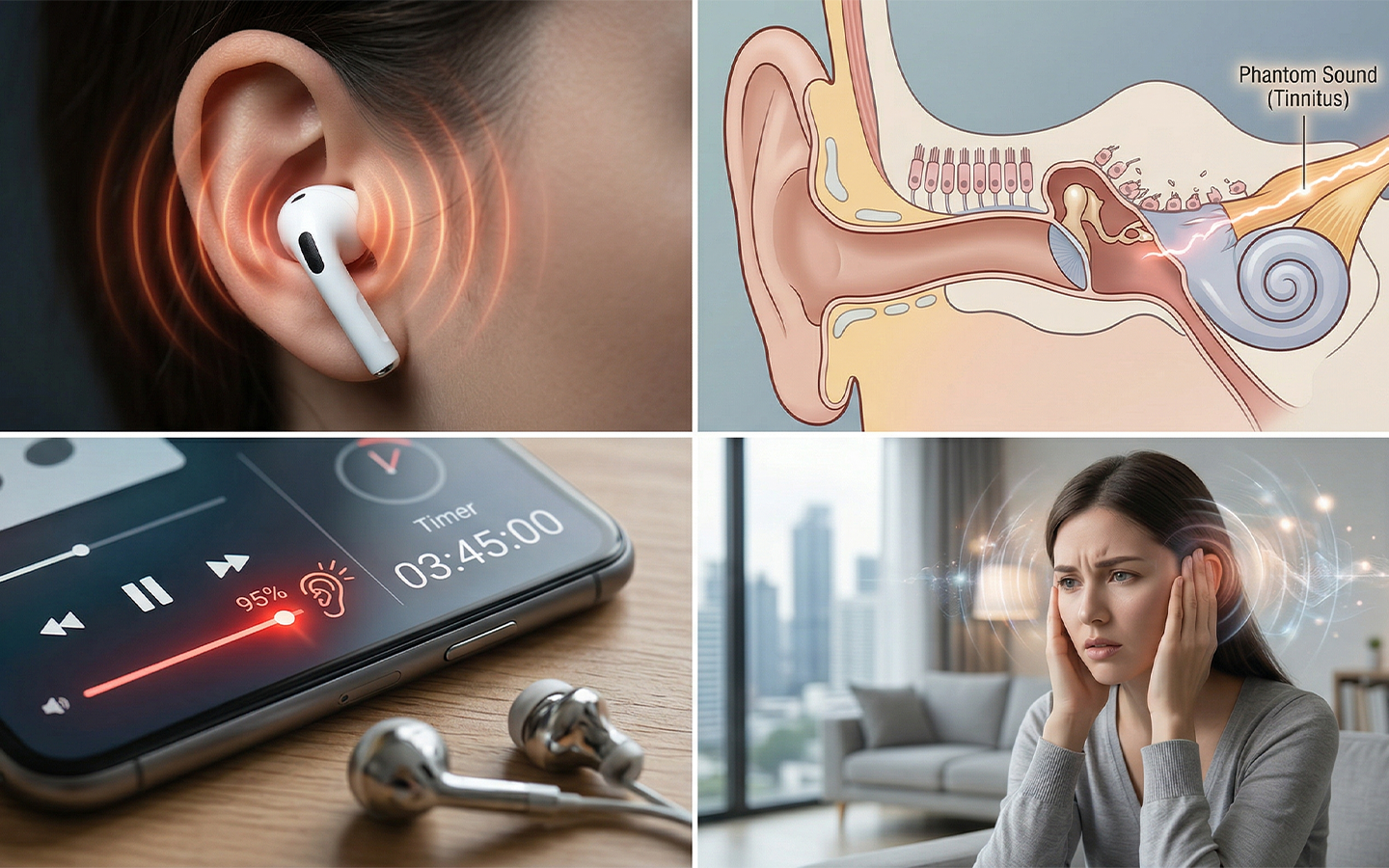
Is Your Earphone Habit Giving You Tinnitus? The Truth No One Tells You
In an era of noise-canceling technology and endless streaming, we have become a “headphone generation.” Whether it’s for deep-work focus, commuting, or gaming, earphones are rarely out of our ears. But as we turn up the volume to drown out the world, a growing number of people are reporting a persistent, ghostly ringing in their ears a condition known as tinnitus.
Tinnitus isn’t just a minor annoyance; it is often the first warning sign of permanent noise-induced hearing loss (NIHL). Here is the science behind the ringing and how to protect your ears without giving up your music.
How Earphones Cause Tinnitus: The Biological “Why”
To understand the link, we have to look at the mechanics of the inner ear. Your cochlea is lined with thousands of microscopic sensory cells called hair cells (stereocilia). These cells convert sound vibrations into electrical signals for your brain.
-
The Proximity Problem: Unlike external speakers, earphones sit directly inside or over the ear canal. This proximity increases the sound pressure level (SPL) significantly, delivering energy directly to the eardrum.
-
The “Flattening” Effect: High-volume sound waves act like a lawnmower over grass. Occasional loud noise bends these hair cells, but they eventually recover. However, prolonged exposure to high decibels causes these cells to snap or die.
-
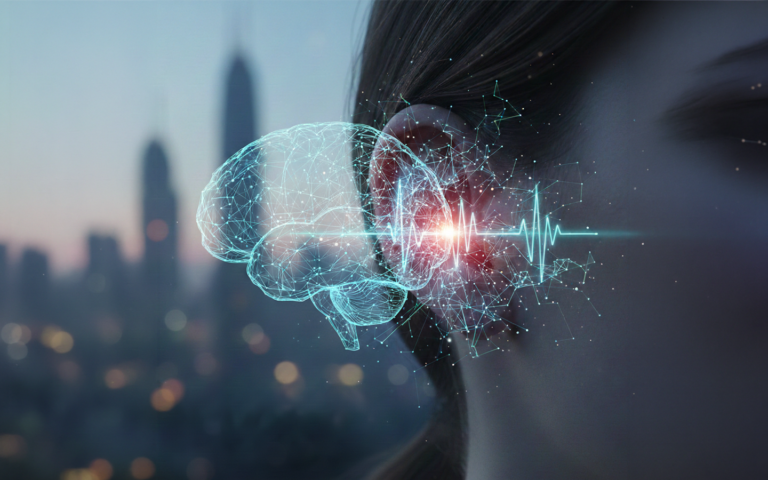
The Phantom Sound: When these cells are damaged, the brain stops receiving signals from certain frequencies. In an attempt to compensate, the brain “turns up the internal gain,” creating a phantom sound to fill the silence. That is the ringing of tinnitus.
The Truth No One Tells You: 2 Hidden Risk Factors
While most people know that 100 dB is dangerous, two hidden factors make earphone habits particularly risky:
1. The Duration Trap
Hearing health is a product of Volume x Time. You might listen at a “moderate” 70% volume, but if you do so for eight hours a day, you are likely exceeding your safe daily “noise dose.” Even lower volumes can cause damage if the exposure is constant.
2. The “Occlusion Effect” and Earwax
In-ear monitors (IEMs) and tight-fitting earbuds block the natural flow of air and wax. This can lead to impacted cerumen (earwax). When wax is pushed against the eardrum by earbuds, it can cause “conductive tinnitus,” which can become chronic if the ear canal becomes inflamed or infected.
The 60/60 Rule: How to Prevent Tinnitus
Audiologists generally recommend the 60/60 rule to mitigate the risk of earphone-induced hearing damage:
-
Volume: Listen at no more than 60% of the maximum volume.
-
Time: Limit earphone use to 60 minutes at a time, followed by a “quiet break” to let the hair cells recover.
Comparison: Earbuds vs. Over-Ear Headphones
| Feature | In-Ear (Earbuds) | Over-Ear (Headphones) |
| Sound Pressure | High (closer to the eardrum) | Lower (more natural dissipation) |
| Tinnitus Risk | Higher | Lower |
| Noise Isolation | Passive (often leads to upping volume) | Active (allows for lower volume) |
Tip: If you want to lower your risk, invest in Active Noise Cancelling (ANC) headphones. By canceling out background noise (like traffic), you are less likely to “crank the volume” to hear your audio.
When to See a Professional
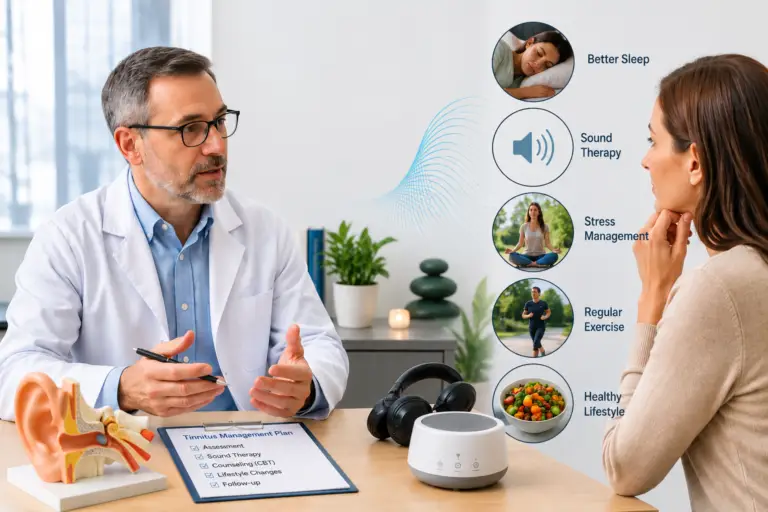
If you notice a ringing that lasts for more than 24 hours after a long listening session, or if sounds seem muffled (the “cotton wool” effect), it is time for an audiometric evaluation. Early intervention and sound therapy can often prevent tinnitus from becoming a life-altering condition.
If you are experiencing a persistent ringing, buzzing, or hissing sound in your ears that doesn’t seem to go away, don’t ignore it especially if you have a history of heavy headphone use. This could be a sign of permanent auditory damage.
The first step in managing tinnitus is understanding its unique nature in your specific case. We invite you to connect with us today to schedule your complimentary Discovery Call.
During this confidential call, our specialists will help you understand the extent of your problem, explore potential management strategies, and determine the best next steps for your hearing health. Don’t let the noise define your life; reach out for personalized support now.
References & Scientific Reading
-
World Health Organization (WHO): Make Listening Safe initiative. Link
-
JAMA Otolaryngology: Unsafe listening practices via personal listening devices in young adults: a systematic review and meta-analysis. (2022).
-
Harvard Health Publishing: Light on Tinnitus: Understanding the Ringing. Link
-
NIDCD: Noise-Induced Hearing Loss and Decibel Levels. Link
-
International Journal of Environmental Research: The Impact of Personal Listening Devices on Tinnitus. (2021).