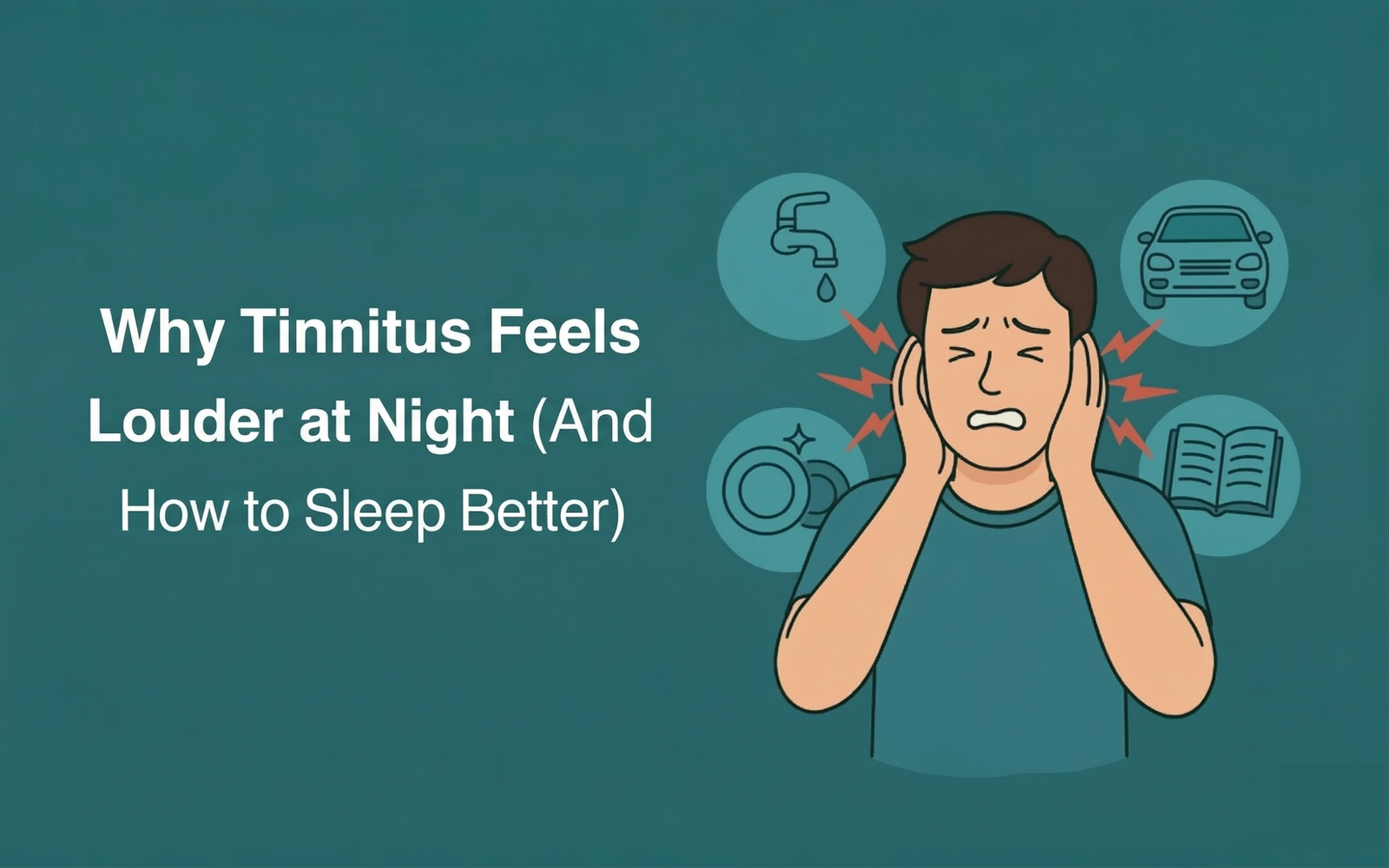
Why Tinnitus Feels Louder at Night (And Proven Ways to Sleep Better)
If you have ever stared at the ceiling at 2:00 a.m., frustrated because the ringing, buzzing, or hissing in your ears feels like a fire alarm only you can hear, you are not alone.
For many, tinnitus is a mild daytime annoyance that transforms into an overwhelming nighttime ordeal. It’s easy to feel like the sound actually turns up in volume when the sun goes down. However, the reality is grounded in neurology, psychology, and environmental acoustics. The sound itself isn’t physically changing—but your brain’s perception of it absolutely is.
Here is the scientific breakdown of why tinnitus feels louder at night, the vicious cycle of sleep loss, and evidence-based strategies to help you reclaim your rest.
The Science: Why Does Tinnitus Spike at Night?
Understanding why tinnitus keeps you awake requires looking at how your brain processes sound, stress, and sleep cycles.
1. The “Sensory Contrast” Effect
During the day, you are surrounded by ambient noise: traffic, conversations, the hum of the refrigerator, or the radio. This background noise naturally masks the internal ringing. When you lie down in a quiet bedroom, that auditory competition vanishes. A study published by the NIH noted that nearly 48% of tinnitus patients report their symptoms worsen in quiet places. Without external sound to process, your brain turns its full auditory attention to the tinnitus.
2. Circadian Rhythms and Brain Oscillations
It isn’t just the quiet; it’s your biological clock. An Ecological Momentary Assessment Study confirmed that tinnitus loudness and distress are genuinely most severe during the night and early morning (12 a.m. to 8 a.m.). Researchers attribute this to circadian fluctuations in stress hormones (like cortisol) and changes in brain oscillatory patterns—specifically, alpha wave power in the temporal regions of the brain.
3. Neurological Hyperactivity and Sleep Stages
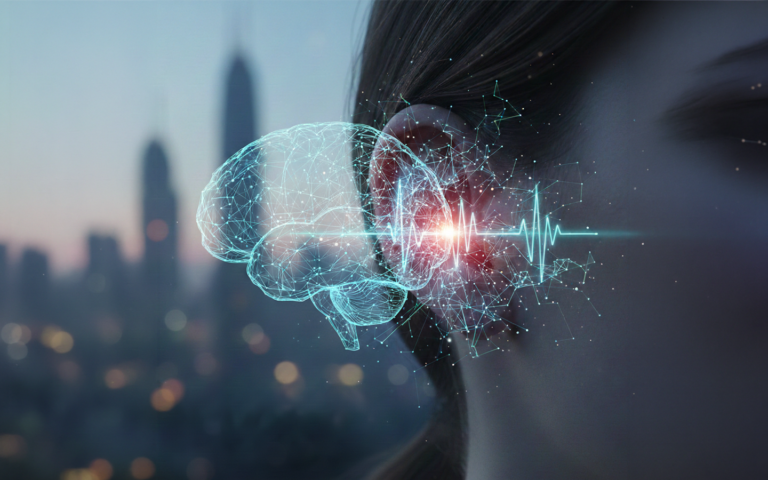
Recent neuroscientific research—including data highlighted by the Sleep and Circadian Neuroscience Institute at Oxford—shows a deep link between tinnitus and sleep physiology. Tinnitus is driven by hyperactive neural activity. As you transition into light sleep, your brain struggles to suppress this hyperactivity. Interestingly, researchers found that reaching deep, slow-wave sleep actually suppresses the abnormal neural activity that generates tinnitus. The problem? Tinnitus keeps you in lighter sleep stages, preventing you from getting the deep sleep that would naturally quiet the ringing. Furthermore, studies on sleep-intermittent tinnitus show that tinnitus sufferers often have severely disrupted REM sleep.
4. The Limbic System’s “Vicious Cycle”
When you notice the ringing, it often triggers frustration or anxiety. This activates your limbic system (the emotional center) and autonomic nervous system (your fight-or-flight response). Your brain perceives the tinnitus as a “threat,” releasing adrenaline and making you hyper-alert. This heightened state of arousal makes sleep neurologically impossible, leading to a vicious cycle: anxiety causes poor sleep, and poor sleep makes the nervous system more sensitive to the tinnitus the next day.
How to Sleep Better with Tinnitus
There is no immediate “cure” or magic switch to turn off tinnitus. However, by leveraging neuroplasticity and proper sleep hygiene, you can train your brain to push the sound into the background.
1. Strategic Sound Enrichment (Masking)
Do not sleep in total silence. Introduce steady, low-level background noise to reduce the stark contrast between the ringing and the quiet room.
White, Pink, or Brown Noise: Pink and brown noise (which emphasize lower frequencies) are often more soothing than the harsh hiss of white noise.
Nature Sounds: Rain, ocean waves, or a gentle stream can provide an acoustic blanket.
Crucial Note: Set the volume just below the level of your tinnitus. The goal is not to completely drown it out (which prevents your brain from getting used to it), but to soften it so it becomes less intrusive.
2. Cognitive Behavioral Therapy for Tinnitus (CBT-t)
The American Tinnitus Association (ATA) highly recommends CBT as a primary treatment. CBT doesn’t change the volume of the sound; it changes your reaction to it. By addressing the anxiety and catastrophic thinking (“I will never sleep again”), CBT helps de-escalate your nervous system. Over time, this promotes habituation—a form of neuroplasticity where your brain learns to classify the ringing as “unimportant background noise,” much like the hum of an air conditioner.
3. Mindfulness and Relaxation Techniques
Since a spiked nervous system prevents sleep, active relaxation is required.
Mindfulness-Based Tinnitus Stress Reduction (MBTSR): Practicing acceptance rather than fighting the sound can dramatically reduce the emotional distress attached to it.
Progressive Muscle Relaxation / Deep Breathing: Doing a body scan or 4-7-8 breathing in bed forces the parasympathetic nervous system to take over, lowering your heart rate and calming the fight-or-flight response.
4. Strict Sleep Hygiene
People with tinnitus need a bulletproof sleep routine to make the transition to sleep as smooth as possible.
Consistent Schedule: Go to bed and wake up at the exact same time every day to strengthen your circadian rhythm.
The 20-Minute Rule: If you are lying in bed awake for more than 20 minutes focusing on the ringing, get up. Go to a dimly lit room and do a quiet, non-stimulating activity (like reading a physical book) until you feel genuinely sleepy. Never use your bed as a place to worry.
Cut Stimulants: Avoid caffeine after noon and limit alcohol before bed. While alcohol might help you pass out initially, it drastically disrupts the deep, slow-wave sleep you need to naturally suppress tinnitus hyperactivity.
The Takeaway
Your tinnitus feels louder at night because of a perfect storm of environmental quiet, circadian rhythms, and sleep-stage neurology. While the sound itself isn’t physically intensifying, your brain’s spotlight is shining directly on it. By utilizing sound enrichment, retraining your emotional response through CBT, and fiercely protecting your sleep hygiene, you can break the vicious cycle of anxiety and reclaim your nights.
You do not have to navigate this alone. Our professionals at Tinnitus Connect are here to help you understand your tinnitus and discover effective sleep strategies tailored to your needs.