
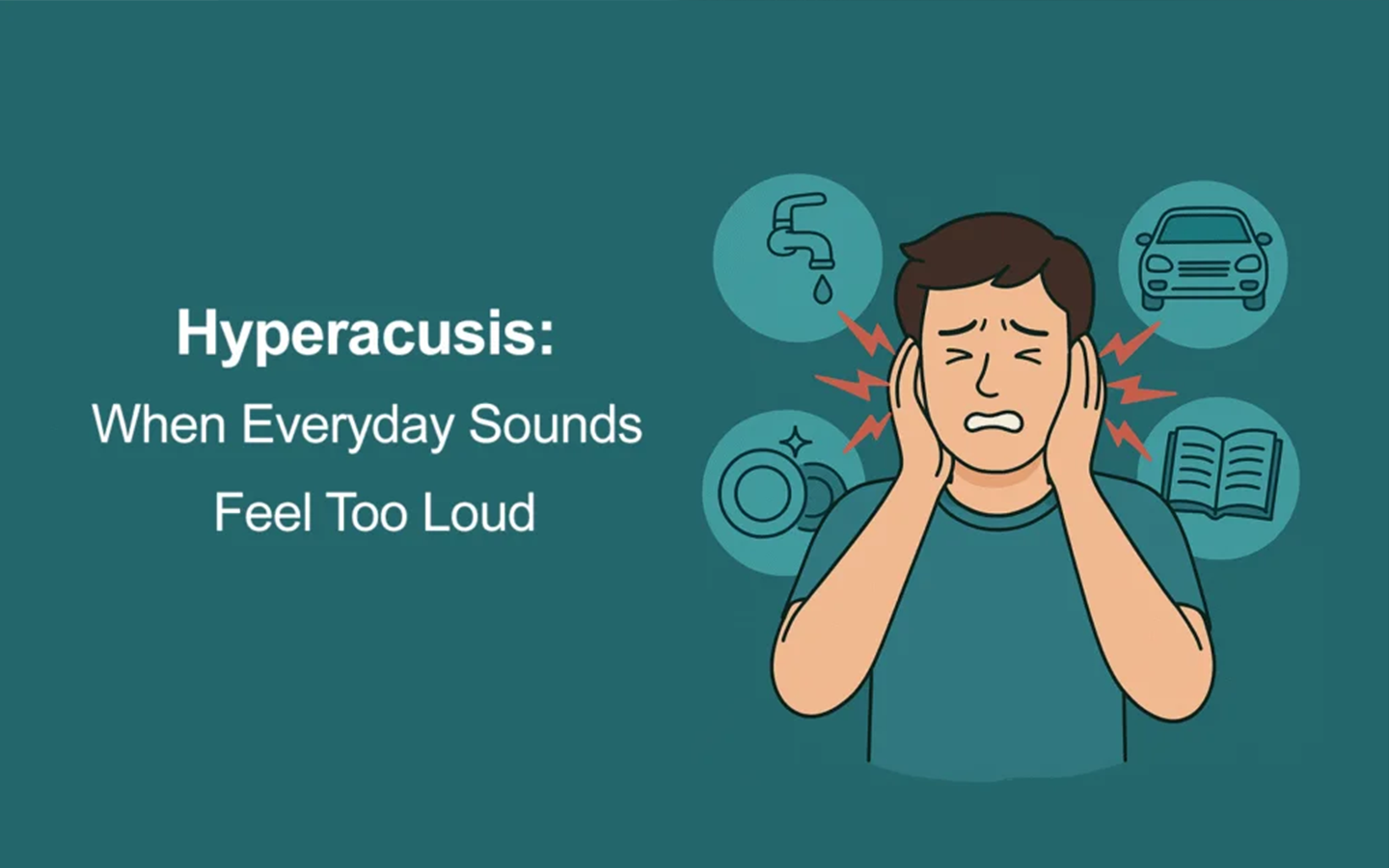
Hyperacusis: When Everyday Sounds Feel Too Loud
Have you ever felt like everyday noises, such as the hum of the fridge, clinking dishes, or even someone laughing, were just too much for your ears to handle? If so, you might be experiencing a condition known as hyperacusis. This heightened sensitivity can turn a world of normal sounds into a source of physical pain or intense anxiety. At Tinnitus Connect, we specialize in helping individuals understand why their environment feels overwhelming and how to reclaim their peace of mind.
Understanding Hyperacusis: Why Normal Sounds Feel Too Loud
Hyperacusis is a condition where your ears become oversensitive to sound. While someone with standard hearing can comfortably listen to sounds up to about 110 decibels (dB), people with hyperacusis often find sounds unbearable at much lower levels—sometimes even around 70–80 dB, which is the volume of busy traffic or a vacuum cleaner.
When you are living with hyperacusis, something as simple as a clattering plate or a barking dog can feel physically painful. This is because the brain’s internal “volume knob” is turned up too high, making it difficult to filter out common environmental noises.
How Much Sound Is “Too Loud”?
Audiologists measure sound tolerance using the Uncomfortable Loudness Level (UCL) or Loudness Discomfort Level (LDL). If your LDL is significantly lower than average, it is a primary clinical indicator of hyperacusis.
-
Normal Hearing: Most people tolerate sounds comfortably up to 100–110 dB.
-
Mild Hyperacusis: Discomfort typically begins around 80 dB.
-
Moderate Hyperacusis: Sounds become uncomfortable at 70–75 dB.
-
Severe Hyperacusis: Even a normal conversation at 60 dB can feel unbearable.
Causes of Sound Sensitivity and Hyperacusis
There isn’t just one single cause for why normal sounds feel too loud. Hyperacusis can develop gradually or appear suddenly due to various factors:
-
Noise Exposure: Prolonged exposure to loud concerts, machinery, or high-volume headphones.
-
Head Injuries: Concussions or jaw injuries (TMJ) can affect how the brain processes sound.
-
Ear Conditions: Issues like Ménière’s disease or infections.
-
Neurological Factors: Migraines, Lyme disease, or Bell’s palsy.
-
Tinnitus Correlation: Up to 86% of people with tinnitus also experience hyperacusis. You can learn more about this connection on our tinnitus management page.
How to Find Relief from Hyperacusis
While it can feel isolating, there are evidence-based ways to manage the condition. The goal of treatment is to “desensitize” the auditory system so that normal sounds no longer feel too loud.
Sound Therapy and Retraining
Gentle exposure to soothing sounds—such as pink noise or nature sounds—helps “retrain” the brain to respond more calmly to the environment. This is often integrated into Tinnitus Retraining Therapy (TRT), a service we offer through our personalized sound therapy plans.
Cognitive Behavioral Therapy (CBT)
Hyperacusis often triggers a “fight or flight” response. CBT helps reduce the anxiety and stress associated with sound sensitivity, teaching your nervous system that these everyday noises are not threats.
Smart Use of Ear Protection
While it is tempting to wear earplugs 24/7, overprotecting your ears can actually make hyperacusis worse by making the brain even more sensitive to quiet. We provide guidance on healthy ear protection to help you find the right balance between safety and recovery.
Find Relief with Tinnitus Connect
At Tinnitus Connect, we know how heavy the world can feel when it’s too loud. We focus on compassionate, expert care to help you navigate your journey toward recovery. Our services include:
-
Audiological assessments to precisely measure your sound comfort levels.
-
Individualized sound therapy tailored to your specific triggers.
-
CBT and counseling to ease the emotional burden of sound sensitivity.
-
A supportive community where you can connect with others who understand your experience.
Final Thoughts
Hyperacusis can make the world feel unbearably loud, but there is hope. By understanding your triggers, working with audiology professionals, and using evidence-based therapies, you can take control of your sound environment instead of letting it control you.
At Tinnitus Connect, we’re here to walk with you on every step of that journey.
References
- Anari, M. et al. (1999). Clinical characteristics of patients with hyperacusis. PMC4432660
- Cleveland Clinic (2022). Hyperacusis: Symptoms, Causes & Treatment. Cleveland Clinic
- Frontiers in Neuroscience (2022). Uncomfortable loudness levels and hyperacusis diagnosis. Frontiers
- Brain Injury Explanation (2023). Hyperacusis severity levels. Brain Injury Explanation
- Wikipedia (2023). Hyperacusis. Wikipedia